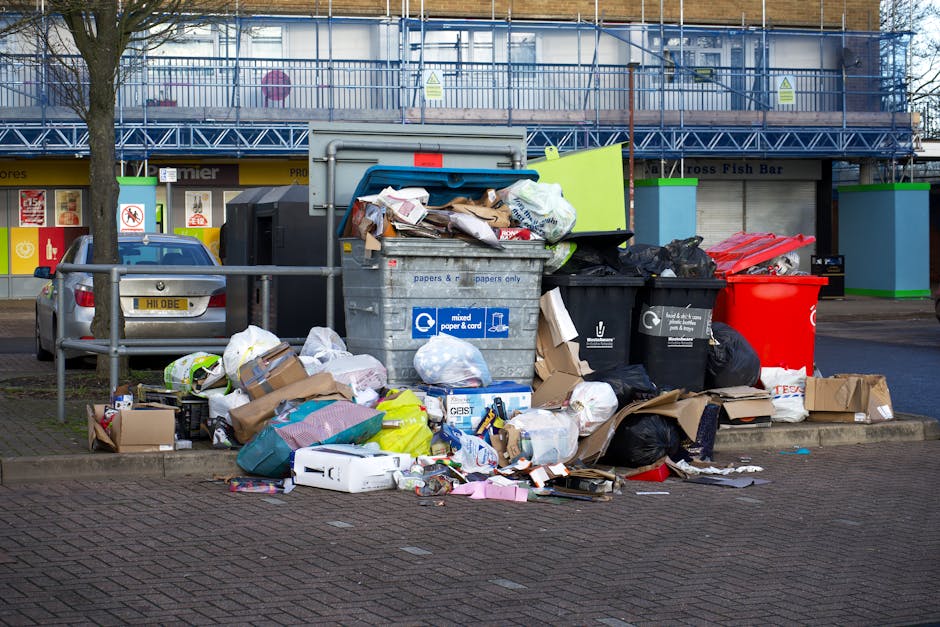
Barnet council rules for bulky waste collection what to know
If you have an old sofa blocking the hallway, a broken wardrobe in the spare room, or a mattress that has somehow become a permanent fixture behind the door, you are probably asking the same thing: what are the Barnet council rules for bulky waste collection what to know before you book or put anything out? Fair question. The rules can feel simple on the surface, but the practical details matter. Miss one small step and you can end up with a wasted journey, a refused collection, or a pile of items sitting outside longer than planned.
This guide explains the basics in plain English. You will learn what bulky waste usually means, how council collection typically works, what to check before you request a pickup, and when a private clearance service may be the easier option. I will also cover common mistakes, practical checklists, and a few real-world scenarios that tend to trip people up. Let's make it straightforward.
Table of Contents
- Why Barnet council rules for bulky waste collection what to know matters
- How Barnet council rules for bulky waste collection what to know works
- Key benefits and practical advantages
- Who this is for and when it makes sense
- Step-by-step guidance
- Expert tips for better results
- Common mistakes to avoid
- Tools, resources and recommendations
- Law, compliance, standards, or best practice
- Options, methods, or comparison table
- Case study or real-world example
- Practical checklist
- Conclusion
- Frequently asked questions
Why Barnet council rules for bulky waste collection what to know Matters
Bulky waste is not the same as everyday household rubbish. That sounds obvious, but in practice it is where most confusion starts. A mattress, chest of drawers, washing machine, or dining table does not fit neatly into normal bin collections, and councils usually handle these items under separate arrangements. Knowing the Barnet council rules for bulky waste collection what to know helps you avoid delays, stay compliant with local expectations, and choose the most sensible disposal route for the item in front of you.
It also matters because the wrong disposal method can create more work later. If you leave furniture where it should not be, or place restricted items in a collection pile, the collection may be rejected. If the item contains hazardous components, like refrigerant gas or sharp broken glass, the issue becomes more than inconvenience; it becomes a safety matter. Truth be told, a quick bit of planning usually saves a lot of faff.
There is another angle too. Many households are juggling tight schedules, school runs, work calls, and the usual London parking headache. A bulky waste collection that fits your timing and access needs can be genuinely useful. A bad one can be a nuisance all week. That is why understanding the process before you book is worth the effort.
Expert summary: The smartest approach is to identify the item, check whether it is accepted, confirm how it must be presented for collection, and decide whether council pickup or a private clearance is the better fit for your timing, access, and volume.
How Barnet council rules for bulky waste collection what to know Works
In practical terms, bulky waste collection is a separate service for large household items that are too big for standard bins. The council may allow booking for a defined number of items, a defined type of item, or both. Exact rules can change over time, so the safest habit is to confirm the current requirements directly before you request a pickup.
Most people can expect a few common steps. First, you identify what needs collecting. Then you check whether it is accepted and how many items can go in one booking. Next, you choose a suitable collection slot and make sure the items are accessible. Finally, you place them out in the way the service asks for, often by the kerbside or another agreed point rather than inside the property. Simple in theory. A bit less simple when you are trying to manoeuvre a wardrobe through a narrow stairwell while your phone is buzzing.
What usually catches people out is the difference between bulky household waste and other waste categories. For example, some items may be classed differently if they are electrical, hazardous, or part of a larger clearance after renovation. That is where a service like general waste removal or furniture disposal can be helpful when the council route is not the best fit.
For households clearing a whole room, or several rooms, it may make more sense to look at broader support such as home clearance or house clearance. If you are dealing with a single sofa or a bed base, a more targeted service may be enough. The key is matching the service to the job, not forcing the job to fit the service.
Key Benefits and Practical Advantages
When you understand the council rules properly, you gain more than just a tidy pavement. You get control. You know what can be collected, when it can be collected, and how to prepare it. That makes the whole job calmer, which is no small thing when you have a hallway full of flat-pack leftovers and a corner of the garage that has slowly turned into a small museum of broken things.
- Cleaner planning: You can line up the item, the booking slot, and access arrangements in one go.
- Lower risk of rejection: If you know the rules, you are less likely to leave out an item that cannot be taken.
- Better safety: Proper handling reduces the chance of trips, cuts, or damage to communal areas.
- Less clutter: Old furniture and appliances are removed without lingering for days.
- Better decision-making: You can compare council collection against a private service with a clear head.
There is also a sustainability angle. If you are sorting items carefully, you are more likely to separate reusable furniture, recyclable components, and items needing specialist disposal. That matters whether you are using the council route or a private one. Many people also choose to pair bulky waste with recycling and sustainability-minded clearance, especially when the job includes mixed materials.
In short, the benefit is not just removal. It is order. And in a busy home, order is lovely.
Who This Is For and When It Makes Sense
This guidance is useful if you are a homeowner, tenant, landlord, letting agent, housing manager, or someone helping a relative clear out a room. It is also useful if you are moving, downsizing, dealing with a bereavement, or simply finally tackling the cupboard that has been suspiciously hard to open for years.
It especially makes sense in these situations:
- You have one or two large household items to dispose of.
- You want to avoid dumping items on the street and waiting around.
- You need to understand whether the council will take your item before you book.
- You are comparing council collection with a paid clearance option.
- You have limited access, stairs, parking pressure, or a time-sensitive move.
For people in flats, shared buildings, or homes with awkward access, a council collection can be a bit fiddly. If the item needs to be carried through narrow communal corridors or down several flights of stairs, you may be better off with a service designed for more complex removals, such as flat clearance or loft clearance. That is especially true when the item is heavy or awkward. You know the type. The thing that seems to grow a second life while you are trying to move it.
Step-by-Step Guidance
If you want the process to go smoothly, use a simple sequence. It sounds basic, but basic works.
- List the items clearly. Write down exactly what needs removing. Include furniture, appliances, mattresses, or mixed household bits.
- Check whether the items are accepted. Some items need specialist handling, especially electrical goods or anything potentially hazardous.
- Separate reusable from damaged items. This helps you decide whether a removal, disposal, or donation-style approach is most appropriate.
- Measure access. Think about doors, stairs, lifts, tight corners, and parking space. A ten-minute job can become a thirty-minute wrestle if access is poor.
- Book the right service. Use the council route for suitable bulky household items, or choose a private clearance if you need speed, larger volumes, or help from inside the property.
- Prepare the items. Remove loose contents, unplug appliances safely, and make sure nothing is hidden inside drawers or cupboards.
- Put items out as instructed. Follow the collection instructions exactly. If the service wants items at kerbside, do that rather than leaving them in a doorway.
- Keep a note of the booking details. A confirmation email, reference number, or time window is useful if anything changes.
If the load is bigger than you first thought, or you find extra waste once you start sorting, a private service can be a practical backup. Many customers choose pricing and quotes before deciding, because it makes comparison easier without guesswork.
One small but useful tip: do the planning in daylight if you can. A half-remembered pile in the dark, on a wet evening, tends to look bigger and worse than it really is. A bit of morning light makes decisions easier.
Expert Tips for Better Results
From experience, the best bulky waste jobs are the ones where the owner has done a little prep before collection day. Not a massive amount. Just enough to avoid surprises.
- Break down furniture where safe. A flat-pack wardrobe that can be dismantled is often easier to move than a fully assembled one.
- Check for hidden hazards. Broken glass, sharp metal, batteries, and liquids can change how an item should be handled.
- Group items by type. Put furniture together, appliances together, and mixed waste together so nothing gets overlooked.
- Keep pathways clear. A clean route to the exit saves time and reduces the chance of damage.
- Be realistic about weight. A heavy bookcase is not just bulky; it is awkward. That distinction matters.
- Ask about special items early. If you have a fridge, freezer, or damaged electrical appliance, check the proper route before moving it.
If you are dealing with a mixed clearance, services like fridge and appliance removal, mattress and sofa disposal, or furniture clearance may be more efficient than treating everything as a single pile. That is usually where people save the most time.
And if the job has a slightly grim edge to it - an old freezer smell, dusty loft boxes, the odd spider that moves faster than you do - just accept that this is normal. Not glamorous, no. Effective, yes.
Common Mistakes to Avoid
The most common errors are not dramatic. They are small, boring ones, which is exactly why they happen so often.
- Leaving out restricted items: If something is not accepted, the booking may not go ahead as planned.
- Underestimating access problems: Tight stairwells and parking restrictions can slow everything down.
- Mixing in hazardous waste: This can create safety and compliance issues.
- Assuming all bulky items are treated the same: Electrical items, furniture, and builders' waste are often handled differently.
- Not checking the collection instructions: Kerbside, front garden, communal area, or inside pickup rules all matter.
- Waiting until the last minute: If you are moving or renovating, last-minute booking is where stress multiplies.
Another mistake is not comparing options. Council bulky waste collection is often suitable, but not always the fastest or most flexible. If the pile has grown into a proper clear-out, you may be better served by garage clearance, loft clearance, or even builders waste clearance if renovation debris is involved.
One little warning: people often think "I'll just put it out and see." That approach can backfire, especially in communal areas. Better to know first, sort second, and move third. Saves bother.
Tools, Resources and Recommendations
You do not need a lot of kit, but a few basics help.
- Tape measure: Useful for checking if the item can be turned, lifted, or passed through a doorway.
- Marker pen and labels: Handy if you are separating items for different disposal routes.
- Gloves: Good for old furniture, dusty loft items, and broken fittings.
- Phone notes or checklist: Keep your booking details, item list, and access notes in one place.
- Camera: A quick photo helps if you need a quote or need to show what is being removed.
For mixed clear-outs, it can also help to think in categories rather than single items. For example: furniture, appliances, soft furnishings, garden waste, confidential paperwork, or household junk. That makes it much easier to decide whether you need a specialist service like confidential shredding, garden clearance, or a broader waste removal visit.
If you are unsure about price, timing, or collection scope, using a quote page is sensible. If you are ready to move ahead, a booking page is the next step. Simple as that. No need to overthink every chair leg.
Law, Compliance, Standards, or Best Practice
When people talk about bulky waste, they often focus on convenience and forget compliance. But compliance matters, especially where the waste includes electricals, refrigerants, sharp materials, or anything that might be considered hazardous.
As a general UK best-practice rule, waste should be stored safely, transferred responsibly, and handled by providers that can manage the material appropriately. If you are using a private clearance service, it is wise to look for clear information about safety, insurance, payment, and responsible disposal. Pages such as health and safety policy, insurance and safety, and payment and security help build that picture.
For residents, the practical takeaway is this: do not leave potentially harmful items in a way that creates risk for neighbours, passers-by, or collection crews. Batteries, chemicals, gases, and damaged electricals deserve extra care. If in doubt, ask before you move anything. That simple pause can prevent a headache later.
Best practice also means keeping communal spaces tidy and respecting local access rules. In a block of flats, one badly placed item can annoy everyone on the landing. You do notice these things. Everyone does.
Options, Methods, or Comparison Table
If you are deciding between council collection and a private clearance, this quick comparison may help. There is no single right answer. It depends on the item, the volume, the access, and how quickly you need the space back.
| Option | Best for | Pros | Watch-outs |
|---|---|---|---|
| Council bulky waste collection | Single or few eligible household items | Straightforward for suitable items; familiar process | May have item limits, access rules, and waiting times |
| Private bulky waste removal | Urgent jobs, awkward access, mixed loads | Often more flexible; can handle inside collections and heavier volumes | Costs vary; you need to compare what is included |
| Specialist item service | Fridges, mattresses, sofas, appliances | More suitable handling for specific item types | Not every item belongs in the same category |
| Full clearance service | Rooms, garages, lofts, or whole properties | Efficient for bigger jobs; less lifting for you | May be more than you need for a single item |
For soft furnishings, a focused service such as mattress and sofa disposal can be a better fit than a broader collection. For business premises, the right route may be different again, and business waste removal is usually the more relevant page to start with.
The real decision point is this: do you want the simplest possible path for one item, or do you want the most efficient path for several? That answer usually tells you everything.
Case Study or Real-World Example
Here is a very typical scenario. A family in Barnet is clearing a spare room before a new baby arrives. The room has an old cot, a broken chest of drawers, two bags of mixed clutter, and an appliance that stopped working a while ago and has been quietly taking up floor space since then. They start with a council bulky waste plan, but soon realise the items are too varied for a single straightforward pickup.
What worked best in this case was splitting the job into parts. The chest of drawers and cot were treated as furniture. The appliance needed separate consideration. The mixed clutter was sorted into what could stay, what could be recycled, and what needed removal. By the time the clear-out was done, the room felt bigger, lighter, and less stressful. You could almost hear the echo when you opened the door.
That is the real lesson here. Bulky waste is rarely just one thing. It is usually a mix of categories, emotions, and "I'll deal with that later" items. Once you separate the pile into sensible groups, the right route becomes much clearer. For some homes, that means council collection. For others, a broader service such as flat clearance or office clearance is the better choice.
Practical Checklist
Use this checklist before you book or move anything:
- Confirm exactly which items you want removed.
- Check whether any item is electrical, hazardous, or unusually heavy.
- Measure doors, stairways, and any tight corners.
- Decide whether the council route is suitable for the load.
- Remove personal items from drawers, cupboards, and pockets.
- Clear the path from the item to the exit.
- Keep booking details, collection windows, and reference numbers handy.
- Have an alternative plan if the item is refused or access changes.
- Consider whether a specialist service would save time.
- Review pricing and inclusions before making the final call.
If you are still not sure, looking at what can go in a skip can help you understand where bulky items fit alongside other waste types. It is not the same as a bulky waste collection, of course, but it is useful context if you are clearing a bigger pile.
Get a free quote today and see how much you can save.
Conclusion
The main thing to remember about Barnet council rules for bulky waste collection what to know is that the details matter more than people expect. Item type, access, timing, and presentation all affect whether the job goes smoothly. If you get those parts right, the process is usually much less stressful than clearing things out on your own and wondering where to put everything.
For one or two suitable household items, council collection can be a good fit. For awkward access, mixed loads, urgent jobs, or larger clear-outs, a private service may be the calmer option. There is no prize for making things harder than they need to be.
Take a breath, sort the pile properly, and choose the route that best fits your day. A tidy space has a way of making everything feel more manageable. Honest, it does.
Frequently Asked Questions
What counts as bulky waste in Barnet?
Bulky waste usually means large household items that are too big for standard bins, such as sofas, mattresses, tables, wardrobes, and some appliances. Exact acceptance rules can vary, so always check the current collection guidance before booking.
Can I put bulky waste out on the pavement?
Only if the collection instructions allow it. Many services require items to be placed at a specific point, such as kerbside or another agreed location. Leaving items out in the wrong place can lead to refusal or complaints from neighbours.
Will the council take electrical items?
Some electrical items may be accepted, but not always in the same way as furniture. Fridges, freezers, and other appliances often need special handling. If you are unsure, check the item category first rather than guessing.
How many items can I book at once?
That depends on the service rules in force at the time. Councils often set limits by item count, size, or type. If you have a mixed clear-out, compare the total load with the booking rules before you commit.
What if my item is too heavy or awkward to move?
Then a private clearance service may be the better choice, especially if the item needs to be removed from inside the property or down stairs. Heavy wardrobes, large wardrobes, and broken furniture often create more access problems than people expect.
Do I need to be home for the collection?
Sometimes yes, sometimes not. It depends on how the collection is arranged and whether access can be provided safely without you being there. If there is any doubt, it is safer to stay available.
What should I do with a sofa or mattress?
Sofas and mattresses are often handled as specific item types. It can help to use a focused service such as mattress and sofa disposal if the council route is not the best fit or if the item needs quick removal.
Can I include builders' debris with bulky waste?
Usually not under a standard household bulky waste collection. Builders' rubble, mixed renovation debris, and heavy construction waste are often treated differently. A builders waste clearance service is often the more suitable route.
How do I avoid a refused collection?
Check the accepted item list, follow the placement instructions, make sure access is clear, and keep restricted items out of the pile. Most refusals happen because of small avoidable issues, not because the load is enormous.
Is a private clearance service better than the council?
Not always. The best option depends on timing, item type, access, and volume. Council collection can be ideal for suitable items, while private removal often makes more sense for bigger, faster, or more awkward jobs.
What if I have several different types of waste?
If your pile includes furniture, appliances, garden waste, and general clutter, you may need more than one disposal method. A mixed job often works best when split into categories rather than forced into a single collection type.
Where can I find more information before booking?
It helps to review the service information, pricing, safety, and sustainability details before you decide. That way you can compare your options properly and choose the route that suits your home, your schedule, and your budget.
If you are ready to clear the space and want a simple next step, start with the option that matches your load, then take it from there. That is usually the cleanest way through it, and a lot less stressful too.